Downloads
Partner Log-In

Two Tunnels, one common Goal: Availability and Safety

Retrofitting and new installation of fire protection systems in New York

With the contract awarded by the main contractor Navillus, FOGTEC is continuing its work in New York: following the successful completion of the first construction phase in the Hugh L. Carey Tunnel, the second phase is now being implemented. In parallel, the Queens Midtown Tunnel is being fully equipped with a high-pressure water mist system.
This means that two key transport infrastructure projects in New York City are being equipped with or further upgraded using modern water mist technology – a clear sign of confidence in this technology for critical infrastructure.

Technical framework and requirements

Both tunnels are among the city’s busiest transport arteries. More than 10,000 vehicles pass through each facility daily, whilst a toll system is in operation; any prolonged downtime would result in immediate financial losses. Added to this are the structural conditions, with comparatively narrow cross-sections and mixed traffic comprising cars, buses and lorries.
Against this backdrop, the fire suppression system plays a central role: in the event of a fire, it limits the thermal load on the structure and building services and supports smoke extraction, particularly under restricted ventilation conditions. At the same time, it helps to enable rapid recommissioning following a fire, thereby ensuring the availability of the respective tunnel facility. This is a particularly important economic consideration, especially in the case of tunnels that are subject to tolls.
The high-pressure water mist systems used are designed as open nozzle systems and are activated on a zone-by-zone basis. The aim is to reduce the heat release rate (HRR) and to significantly lower smoke production and radiant temperatures.

Hugh L. Carey Tunnel – Expansion during ongoing operations

In the second construction phase, the existing system will be extended to cover the remaining approximately two-thirds of the tunnel. The focus here is particularly on hydraulic integration into the existing system structure, so that no extension of the existing pump room is required. At the same time, it must be ensured that sufficient pressure conditions are available all the way to the tunnel portal on the Brooklyn side.
Another key focus is on adapting the control logic to reliably integrate the additional fire suppression zones into the overall system. The experience gained during the first construction phase, in which the same type of water mist system was already installed whilst the tunnel was in operation, forms an important basis for this.

Queens Midtown Tunnel – Complete Installation

In the Queens Midtown Tunnel, however, a completely new high-pressure water mist system is being installed. A new pump room is being constructed for this purpose, the components of which largely correspond to those of the Hugh L. Carey Tunnel. This will facilitate future maintenance and operation through standardised technology and standardise the system components for on-site service technicians
The system is designed to cover the entire length of the tunnel and will be integrated into the existing operational and safety infrastructure. This creates a comprehensive protection concept that is optimally tailored to the specific requirements of the tunnel.

Design based on regulations and fire tests

The systems are designed on the basis of project-specific requirements and in accordance with relevant regulations, including NFPA 502. In addition, findings from extensive fire tests are incorporated into the planning, in particular from the SOLIT guidelines and the associated tunnel fire tests.
This combination of normative requirements and experimentally validated data ensures that the systems are specifically designed for real-life fire scenarios in tunnel operations.

Conclusion: Protecting infrastructure, ensuring availability

The projects in the Hugh L. Carey Tunnel and the Queens Midtown Tunnel demonstrate how modern fire protection contributes to safeguarding critical infrastructure. Under demanding conditions, solutions are developed that are normatively sound and validated in practice.
The key factor here is not only firefighting, but also limiting the impact on the structure, technical systems and availability. High-pressure water mist technology makes a targeted contribution to this, ensuring that key transport arteries can be quickly restored to use even in the event of an incident.
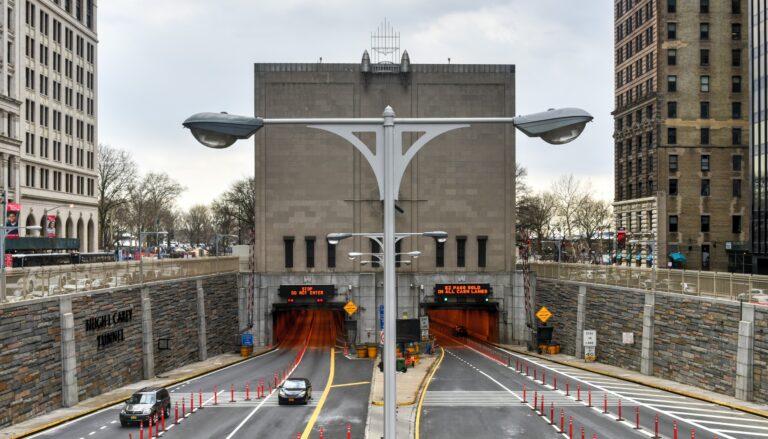
Hugh L. Carey Tunnel
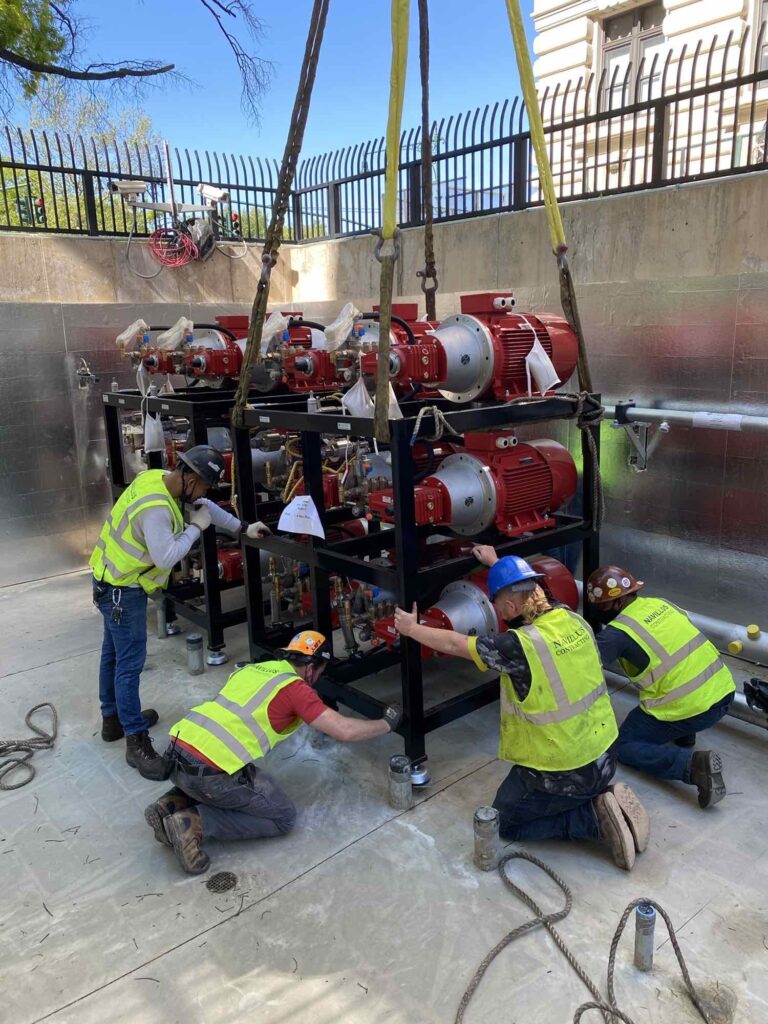
Delivery of the pump system/ Hugh L. Carey Tunnel

External Content from Brevo
This section contains our newsletter subscription form. To display this content, your consent is required to transfer data to external servers.

More Information

Two Tunnels, one common Goal: Availability and Safety

Your email has to be confirmed. Check your inbox!

Your email has to be confirmed. Check your inbox!

Your download is awaiting activation!

"*" indicates required fields

Name*
This field is hidden when viewing the form