Test protocol from the SUVEREN_4_Depots research project published
As bus fleets around the world become increasingly electrified, demands on fire safety in bus depots are rising. Lithium-ion batteries and the high energy density of modern vehicles in particular require new, robust fire protection and safety concepts that specifically take into account the close parking arrangements in bus depots.
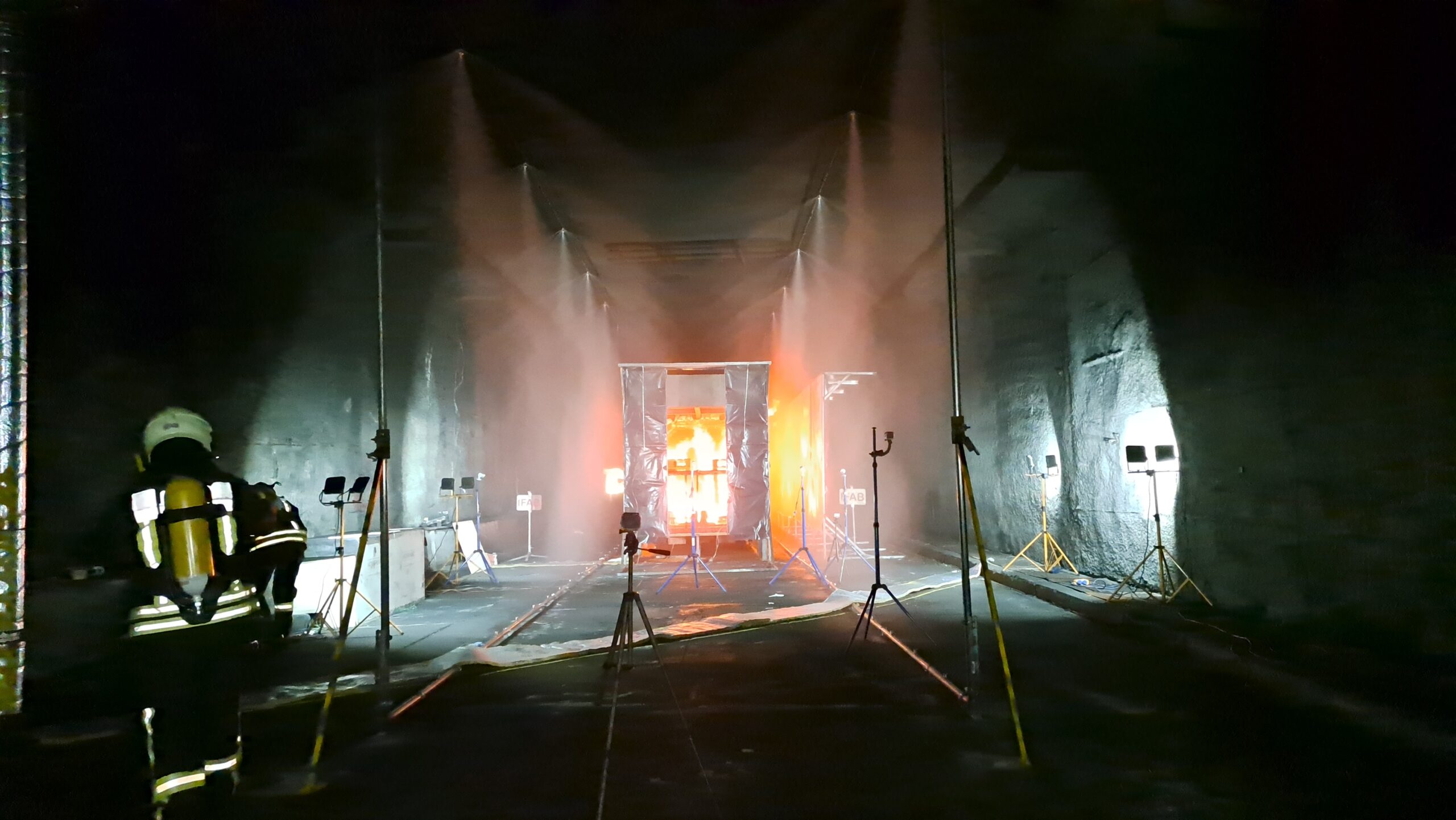
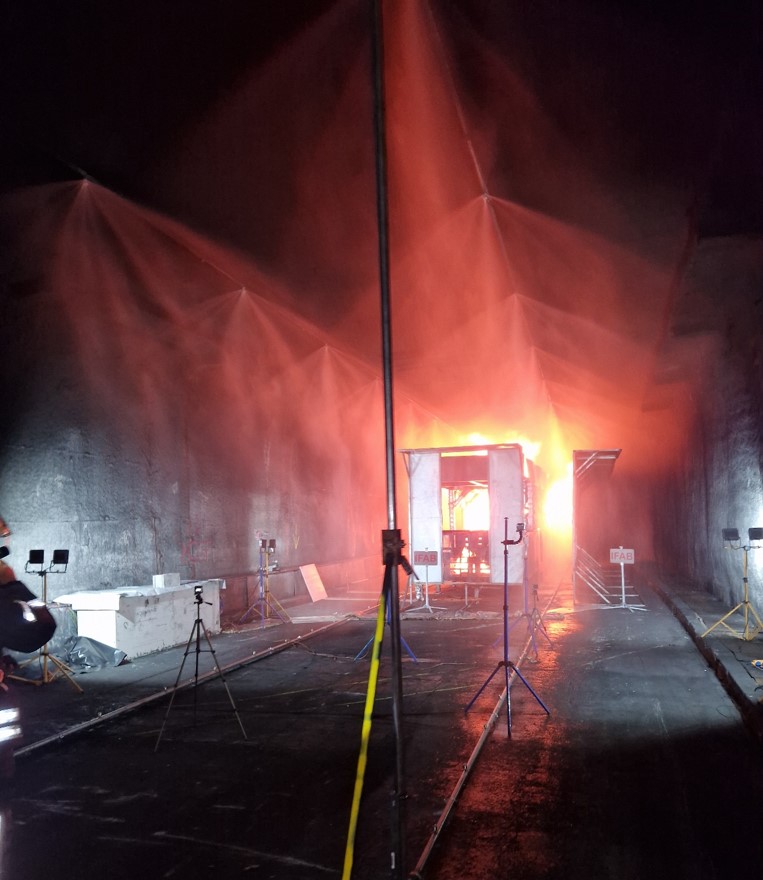
The SUVEREN_4_Depots research project therefore developed a standardised test protocol for independently testing fire suppression systems (BBA) in full-scale fire tests. The specifications were designed so that the results are independent of the type and manufacturer of the bus. These test specifications were applied for the first time in the research project, with a BBA from FOGTEC being successfully tested as the first system of its kind worldwide. These tests were carried out and documented under the supervision of TÜV Süd and STUVA.
Interdisciplinary collaboration as a key factor for the research project
Close collaboration between a consortium comprising industry, research and trade associations was a key factor in the project’s success. This brought together the various areas of expertise and perspectives needed to find a practical solution.
The following were involved:
• FOGTEC Brandschutz GmbH for system development and technology
• University of Wuppertal for scientific analysis and evaluation
• Fraunhofer Heinrich Hertz Institute (HHI) for measurement technology and data acquisition
• IFAB – Ingenieure für angewandte Brandschutzforschung GmbH for the planning and execution of the large-scale fire tests, as well as evaluation
• VDV (Association of German Transport Companies) for the operator’s perspective and practical requirements
• TÜV Süd and STUVA for third-party verification
The test protocol itself was developed under the leadership of IFAB, the University of Wuppertal, the VDV and STUVA e.V., and thus represents a broadly agreed basis for future testing and evaluation procedures.
From the planning of a research project to a standardised testing procedure
The test protocol is based on large-scale 1:1 fire tests in which real-world bus and e-bus scenarios were investigated. Particularly significant are the close parking arrangements in depots and the development of the fire. Building on this, the new test protocol defines, for the first time, standardised test set-ups for bus depots, clear evaluation criteria for fire suppression systems and reproducible test conditions for different fire scenarios.
It should be emphasised that the battery is not always the cause of the fire. Often, a fire develops due to other factors, and thermal runaway of the battery is merely the consequence of the heat build-up.
The test protocol thus provides a robust basis for comparing systems
Relevance for future projects
This offers the following advantages for designers, operators and certification bodies:
• Well-founded design of fire suppression systems and how they should be tested
• Support for approval and authorisation processes
• Greater planning certainty regarding fire protection concepts for e-bus depots
• A basis for future standards and guidelines
• A proven basis for the test setup
Feedback is expressly welcome!
Are you planning or operating a bus depot? Do you have questions about the test report? Are you considering live fire tests or are you a certification body? We would be happy to share our experience from numerous live fire tests and assist in the development of bespoke fire suppression systems for your depot!