Night trains on the rise: an old idea, revived
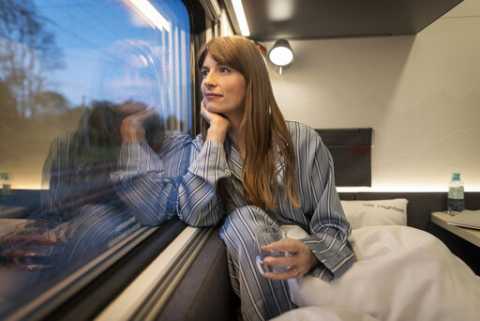
Who doesn’t dream of falling asleep relaxed in the evening and waking up refreshed in another city in the morning? Night trains combine mobility and overnight accommodation in one, opening up a special form of travel that is not only practical and efficient, but also extremely comfortable. Whether from Hamburg to Vienna or from Budapest to the Adriatic Sea – night trains are once again an attractive option for commuters and holidaymakers alike.
The history of night trains dates back to the 19th century. At that time, the luxurious sleeping cars were primarily an alternative form of seating for the nobility and wealthy citizens. From the 1950s onwards, night trains also became a means of mass transport in Germany, before aeroplanes took over this role as a faster means of transport.
Since the 1990s, these connections have continued to decline in importance, particularly as low-cost airlines have entered the market. In addition, Deutsche Bahn only carried out minimal maintenance on its ageing night train carriages. In 2016, it finally discontinued its night train service completely. Neighbouring countries, on the other hand, focused on improving their services and continued to expand connections in Europe – with success: the demand for night trains is currently experiencing a significant revival.
Cooperation instead of competition: EuroNight and NightJet as pioneers
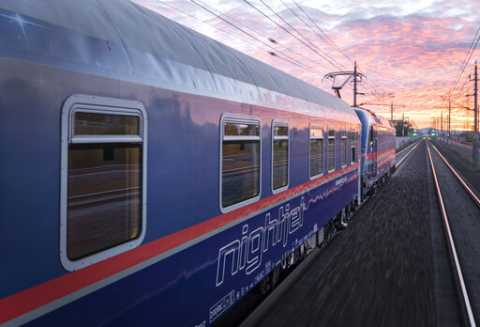
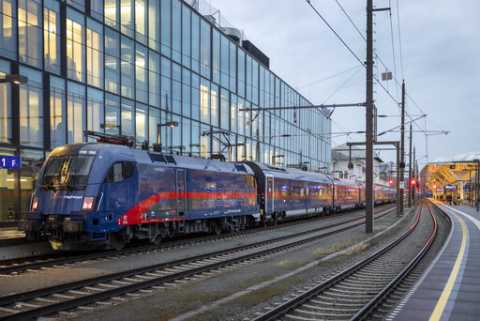
Most night train services in Europe operate under the name EuroNight. These trains are part of a cooperation between various European railway companies – for example, from Croatia, Poland, Hungary and Austria. Overall, the number of connections offered in Europe has increased from around 90 to more than 200 routes since 2020. The Austrian Federal Railways (ÖBB) remains the pioneer with its NightJet service.
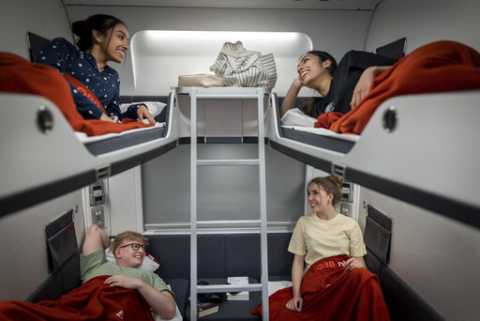
Night trains are in tune with the spirit of the times: they are comfortable, sustainable and efficient. Whether you choose a seat, a couchette or a private cabin with its own washroom, there is no need for hotel stays as stopovers, transfers to the airport or long waits in traffic jams. This makes them a real competitor to other types of travel.
Comfort meets complexity: challenges for customers and providers
Nevertheless, new night train routes face familiar challenges: different providers, confusing booking platforms and a lack of interfaces prevent a consistent, user-friendly system and make travel planning considerably more difficult. Travellers need a lot of patience and time here.
Providers also face familiar difficulties: longer routes mean higher fees and increased energy consumption; couchette and sleeping cars take up more space. Staff must be specially trained for night operations and are entitled to night supplements. In addition there are external factors, such as construction sites, which make train operations even more difficult. All these factors cannot be passed on to the ticket price to the same extent – a complex area of tension between customer demands and structural conditions.
Technology that travels with you: FOGTEC solutions for modern night trains
In Europe, ÖBB is considered a pioneer in night train services with its NightJet line. These trains offer a high level of comfort and modern safety equipment. This is essential because, unlike during daytime travel, potential hazards such as smoke or fire are not noticed immediately by sleeping passengers. Mini-cabins – small, cocoon-like cabins like those in the NightJet – offer a high level of privacy and comfort, but their compact design and limited escape routes place special demands on fire protection.
In addition, long journeys with varying national standards increase the complexity of safety concepts. Italy is one example: with a high proportion of tunnels on its railway lines, additional requirements apply there for detection, alarm systems and firefighting on trains.
FOGTEC systems meet these special fire protection requirements in night trains and can be individually adapted to the respective conditions. As a long-standing partner of ÖBB, FOGTEC has equipped the night trains built by Siemens with smoke extraction systems in the passenger area and smoke and temperature detectors in bistros and technical areas, among other things.
The fact that this technology works reliably even under extreme conditions such as sub-zero temperatures is demonstrated in the sleeping cars of Stadler’s FLIRT Nordic Express in Norway.
In which direction is the journey going?
Demand for night trains is likely to continue to rise in the coming years. The European Union is planning a unified night train network with a central booking system by 2030. For travellers, this could mean a wider choice of destinations, more comfortable connections and easier booking options. Night trains thus could become a cornerstone of sustainable and comfortable mobility in Europe.