Fire Protection for Areas Handling Flammable Liquids
Rapid Fire Suppression with High-Pressure Water Mist
Rapid Fire Suppression with High-Pressure Water Mist
pre-warning times requirement assures safe environment for people and minimal fire damage thus business interruption
cooling effect compared to any other firefighting agent assures safe environment for people and effectively avoids re-ignitions
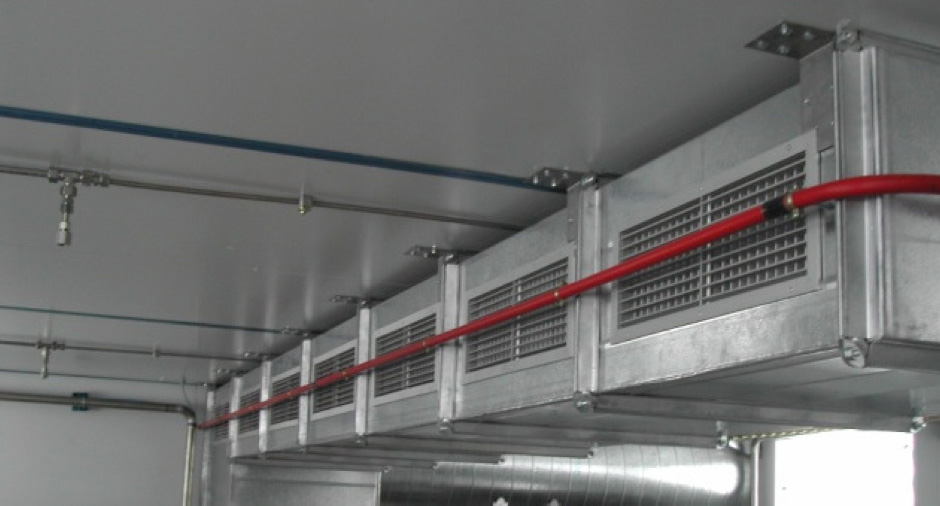
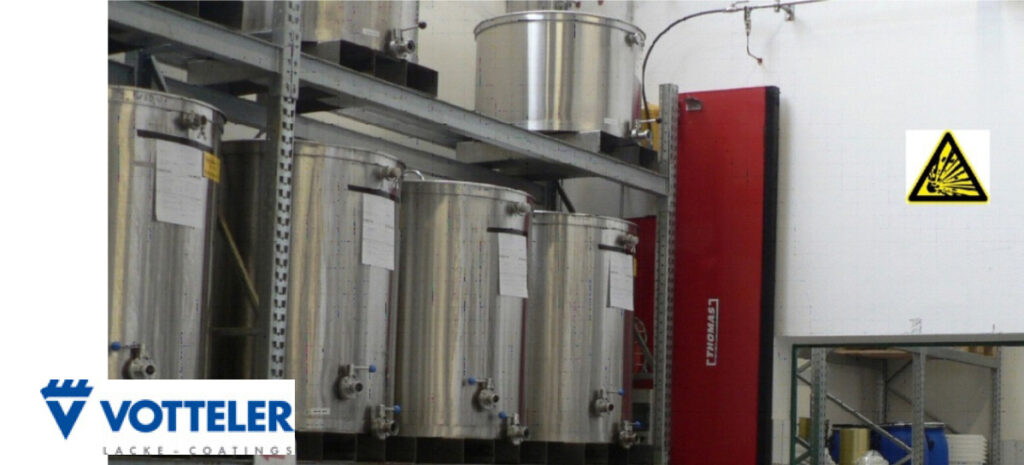
Paint shops and other operational areas where flammable liquids and substances are processed or stored present a significant fire risk. If a malfunction occurs, fire can spread rapidly due to the presence of these liquids. This often results in prolonged downtime and substantial financial losses.
High-pressure water mist systems can significantly reduce this risk. The fine mist spreads instantly and uniformly throughout the affected area, without requirement for a pre-warning. This ensures the rapid cooling of flammable liquids and slows the spread of fire effectively.
A key advantage of high-pressure water mist technology is that only a minimal amount of water is required. This minimises water damage and results in significantly less contaminated extinguishing water. It simplifies evacuation and clean-up requirements, reducing post-fire costs.
FAQ – Fire Protection in Flammable Liquid Areas
What is high-pressure water mist and how does it work?
Fine water mist atomizes water into very small droplets, spreads quickly throughout the area, cools flammable liquids, and helps prevent fire spread.
Why is it often preferable to gas suppression or sprinklers?
Water mist acts immediately and requires significantly less water than sprinklers, typically resulting in fewer water damages and less contaminated firefighting water. Suitability always depends on the specific application.
What requirements must be met?
System certification, appropriate room geometry, coordination with ventilation/extraction, and verification of process compatibility are necessary. A project-specific risk assessment is essential.
How does it affect downtime, evacuation, and firefighting water?
Rapid cooling facilitates evacuation. Typically, water damage and contaminated firefighting water are reduced, though outcomes depend on the specific incident scenario.